

Best Time to Climb Kilimanjaro
A Route-by-Route, Month-by-Month Guide for Every Climber
Introduction
Mount Kilimanjaro is Africa’s highest peak and the world’s tallest free-standing mountain, rising to 5,895 metres (19,341 feet) above sea level on the border of Tanzania. Every year, tens of thousands of climbers from around the world attempt to reach Uhuru Peak — and while no technical climbing experience is required, success depends heavily on choosing the right time of year.
The mountain creates its own weather, and conditions vary dramatically by month, season, and route. This guide will help you choose the best window for your climb, understand the route options, and know what to realistically expect at every stage of the ascent.
Kilimanjaro is accessible from Moshi and Arusha — both just a few hours from NMWTZ’s base in Monduli, making it an ideal add-on to a volunteering placement or Tanzania safari.
1. The Short Answer — Best Months to Climb
If you want the simplest possible answer: January–February and June–October are the two best windows to climb Kilimanjaro. These are the mountain’s dry seasons, offering the clearest skies, most stable conditions, and highest summit success rates.
| Period | Season | Summary |
| January – February | Short Dry Season | Excellent. Clear skies, cold but stable. Less crowded. Great value. |
| March – May | Long Rains | Avoid. Heavy rainfall, snow, ice, poor visibility. Low success rates. |
| June – October | Long Dry Season | Best overall. Peak conditions, warmest temps, highest success rates. |
| November – December | Short Rains | Manageable. Showers most days but brief. Quieter, cheaper. Still possible. |
2. Month-by-Month Breakdown
January — Excellent
January is one of the best months to climb Kilimanjaro. The short dry season is well underway, skies are generally clear, and the mountain receives fewer climbers than the July–August peak. Temperatures are cold at altitude — expect well below freezing at the summit — but conditions are stable and visibility is often superb. A great choice for those wanting quality conditions with smaller crowds.
February — Excellent
February is arguably the single best month to climb Kilimanjaro. The weather is at its most stable, crowds are at their lowest of the good-weather months, and the combination of clear skies and crisp air makes for breathtaking views from the summit. If you have flexibility in your schedule, aim for February.
March — Poor
March marks the beginning of the long rainy season on Kilimanjaro. Rainfall increases significantly and snow and ice accumulate on the upper mountain. Visibility deteriorates, trail conditions worsen, and summit success rates drop considerably. We do not recommend climbing in March unless you have no other option.
April — Avoid
April is the worst month to attempt Kilimanjaro. Rainfall is at its heaviest, the upper mountain is frequently covered in ice and snow, and cloud cover makes summit views nearly impossible. Most experienced operators discourage climbs in April. Success rates are at their annual low and the experience is significantly diminished.
May — Poor to Fair
The rains begin to ease toward the end of May, and conditions gradually improve. Early May is still poor, but by the final week the mountain starts to clear. If you must travel in this period, aim for late May. Prices are at their lowest and crowds are minimal — but don’t expect reliable conditions.
June — Very Good
June marks the start of the long dry season and is an excellent month to climb. The mountain dries out quickly after the rains, skies clear, and summit success rates climb sharply. Temperatures are cooler than July–August, but conditions are stable and reliable. A solid choice, particularly for those who want good conditions without peak-season crowds and prices.
July — Peak Season / Excellent
July is one of the two busiest months on Kilimanjaro alongside August. Summit success rates are at their annual highest, conditions are dry and stable, and the views from Uhuru Peak are extraordinary. The downside is that popular routes — particularly Marangu and Machame — can feel crowded. Book well in advance and consider a less-trafficked route such as Lemosho or Rongai.
August — Peak Season / Excellent
August mirrors July in almost every way — outstanding conditions, high success rates, and heavy traffic on the mountain. If you are set on July or August, the Lemosho or Northern Circuit routes offer a more exclusive experience. Prices are at their annual peak in both months.
September — Excellent
September is an excellent month that many experienced climbers consider the best of all. Conditions remain dry and clear, success rates are high, yet crowds begin to thin noticeably from the August peak. Prices start to ease. September represents one of the best balances of conditions, value, and crowd levels on the mountain.
October — Very Good
October remains a strong choice. The dry season extends well into the month, conditions are generally good, and both crowds and prices continue to fall. Toward the end of October, short rains may begin to arrive, but they typically don’t significantly affect climbing conditions. A good-value option with reliable weather.
November — Fair
The short rainy season arrives in November. Showers are usually brief — often afternoon events — and many climbers successfully summit in this month. Trails can be muddy and lower slopes foggy, but the upper mountain often remains clear. Prices and crowds are low. Experienced climbers willing to accept variable conditions can still have a great climb in November.
December — Fair to Good
Early December is similar to November — variable but manageable. By mid-December the short rains typically ease, and the second half of the month can offer quite good conditions. December is also popular with year-end travellers, so the last two weeks see a spike in bookings. Christmas week in particular fills up fast — book early if targeting this period.
3. Kilimanjaro Routes — Which is Best for You?
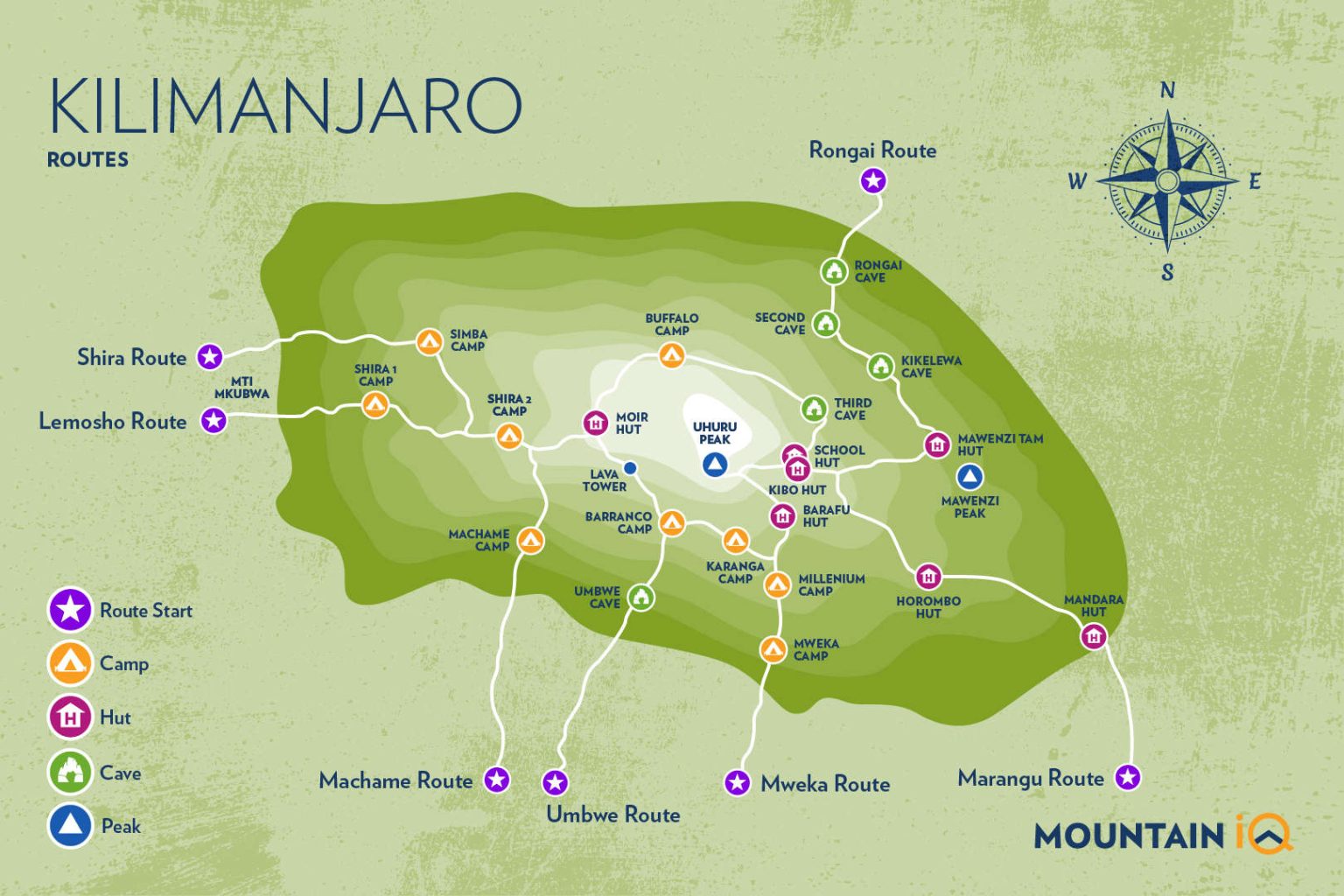
There are seven official routes to the summit of Kilimanjaro. Each has a different character, duration, scenery, and level of difficulty. The right route depends on your fitness, budget, experience, and how much time you have.
| Route | Duration | Difficulty | Traffic | Best For |
| Marangu | 5–6 days | Moderate | Very High | Budget climbers. Only route with hut accommodation. |
| Machame | 6–7 days | Challenging | High | Most popular scenic route. Good acclimatisation profile. |
| Lemosho | 7–8 days | Moderate | Low–Med | Best overall. Long approach, superb scenery, great acclimatisation. |
| Rongai | 6–7 days | Moderate | Low | Approach from the north (Kenya side). Drier, quieter. |
| Northern Circuit | 9–10 days | Moderate | Very Low | Longest route. Best acclimatisation. Most exclusive experience. |
| Umbwe | 6–7 days | Very Hard | Very Low | Steep and direct. Experienced hikers only. Low success rates. |
| Shira | 7–8 days | Moderate | Low | Similar to Lemosho. Starts at higher altitude — mixed views on acclimatisation. |
3.1 Our Recommended Routes
Lemosho Route — Best Overall
The Lemosho route is widely regarded as the finest Kilimanjaro route available. It approaches from the west through pristine rainforest, crosses the spectacular Shira Plateau, and joins the Southern Circuit to the summit. The longer duration (7–8 days) provides excellent acclimatisation, resulting in higher success rates. Scenery is outstanding throughout. This is the route we most frequently recommend to first-time Kilimanjaro climbers.
Machame Route — Best for Scenic Variety
The Machame route (nicknamed the ‘Whiskey Route’) is the most popular scenic route on the mountain. It passes through five distinct climate zones and offers dramatic and varied landscapes. The 7-day version is strongly preferred over the 6-day — the extra day significantly improves acclimatisation and summit success rates. A solid choice for fit, experienced hikers.
Northern Circuit — Best for Exclusivity
The Northern Circuit is the longest route on Kilimanjaro at 9–10 days. It circumnavigates the entire northern face of the mountain before approaching the summit from the west. You will see very few other climbers, the acclimatisation profile is the best of any route, and the remote northern slopes offer scenery found nowhere else. The premium price tag is justified.
Marangu Route — Best Budget Option
The Marangu route (nicknamed the ‘Coca-Cola Route’) is the only route with dormitory-style hut accommodation rather than tents, making it the least expensive option. It is also the most direct route — and consequently has the lowest summit success rate of the major routes. The 6-day version is not recommended; the 7-day adds a crucial acclimatisation day. Good for those on a strict budget.
4. Acclimatisation — The Most Important Factor
More climbers fail to summit Kilimanjaro due to poor acclimatisation than any other reason. Altitude sickness (Acute Mountain Sickness, or AMS) is a serious concern above 3,000 metres and becomes increasingly dangerous above 4,000 metres. Kilimanjaro’s summit sits at 5,895 metres — higher than any mountain in Europe or the Americas outside of the Andes.
4.1 The Golden Rule: Go Slow
The Swahili phrase used by Kilimanjaro guides — ‘pole pole’, meaning ‘slowly slowly’ — is the most important piece of advice for any climber. Your body needs time to adapt to lower oxygen levels at altitude. Rushing is the primary cause of summit failure and altitude-related illness.
4.2 Choosing the Right Duration
- 5-day routes: Not recommended. Insufficient acclimatisation time. Summit success rates are significantly lower.
- 6-day routes: Possible but tight. Success rates are better but still lower than longer options.
- 7-day routes: The recommended minimum for most climbers on the Machame and Lemosho routes.
- 8–10 day routes: Ideal. Lemosho (8 days) and Northern Circuit (9–10 days) offer the best acclimatisation profiles and consistently the highest success rates.
4.3 Symptoms of Altitude Sickness to Know
- Mild AMS: Headache, fatigue, loss of appetite, nausea, dizziness. Common and manageable — rest, hydrate, and do not ascend further until symptoms resolve.
- Moderate AMS: Severe headache unresponsive to medication, vomiting, difficulty walking in a straight line. Descend immediately.
- Severe AMS (HACE/HAPE): Confusion, inability to walk, breathlessness at rest. Medical emergency — descend immediately and seek medical attention.
4.4 Medication
Diamox (Acetazolamide) is commonly prescribed to help prevent altitude sickness. Consult your doctor before your climb — it is not suitable for everyone and has side effects. It is not a substitute for a sensible ascent rate or the correct route duration.
5. What to Expect on the Mountain
5.1 Climate Zones
Kilimanjaro passes through five distinct ecological zones as you ascend from base to summit:
- Cultivated Zone (800–1,800m): Farmland and villages on the lower slopes. Warm and humid.
- Rainforest Zone (1,800–2,800m): Dense montane rainforest. Wet, green, and teeming with wildlife including colobus monkeys and buffalo.
- Heath & Moorland Zone (2,800–4,000m): Open heathland with giant heathers and giant groundsels. Cooler and drier.
- Alpine Desert Zone (4,000–5,000m): Rocky and barren. Extreme temperature swings between day and night. Very little vegetation.
- Arctic Zone (5,000–5,895m): Ice fields, glaciers, and near-zero oxygen. Temperatures far below freezing at night.
5.2 Temperatures by Altitude
| Zone / Altitude | Daytime High | Night Low (Dry) | Night Low (Summit) |
| Rainforest (~2,000m) | 20–25°C / 68–77°F | 10–15°C / 50–59°F | — |
| Moorland (~3,500m) | 10–15°C / 50–59°F | 0–5°C / 32–41°F | — |
| Base Camp (~4,700m) | 5–10°C / 41–50°F | -5 to -10°C / 14–23°F | — |
| Uhuru Peak (5,895m) | -5 to -10°C / 14–23°F | -15 to -20°C / 5 to -4°F | -20 to -30°C / -4 to -22°F |
5.3 Summit Night
The summit attempt begins at midnight from base camp (typically Barafu or Kibo Hut). You will hike through the night in darkness, extreme cold, and low oxygen. This is the hardest section of the entire climb — physically and mentally. A good headlamp, warm layers, and a determined pace (‘pole pole’) are essential.
Sunrise at Stella Point or Uhuru Peak — if the sky is clear — is one of the most extraordinary experiences available to any traveller on earth. The effort is absolutely worth it.
6. Fitness & Preparation
Kilimanjaro requires no technical climbing skills — it is a long, steep hike at extreme altitude. However, physical preparation makes a significant difference to both your summit success rate and your overall enjoyment of the climb.
6.1 Recommended Training
- Start training at least 3–6 months before your climb.
- Hike regularly with a loaded pack (10–15kg) on varied terrain, including hills and stairs.
- Build cardiovascular fitness through running, cycling, or swimming 3–4 times per week.
- If possible, spend time at altitude before your climb — even a few days at 3,000–4,000m helps your body prepare.
- Strength training for legs, core, and back will help with the long descent days.
6.2 Who Can Climb Kilimanjaro?
Kilimanjaro is climbed by people of a very wide range of ages and fitness levels. The mountain has been summited by climbers in their 70s and 80s, as well as by teenagers. The key requirements are reasonable physical fitness, good health, and the mental determination to keep moving when conditions are tough. Anyone with serious cardiac or respiratory conditions should consult a doctor before attempting the climb.
7. Booking Your Kilimanjaro Climb from Arusha
All Kilimanjaro climbs begin in either Moshi or Arusha — both within easy reach of NMWTZ’s base in Monduli. Kilimanjaro International Airport (KIA) serves both cities.
7.1 What’s Included in a Typical Climb Package
- Park fees and permits (mandatory — currently $70 USD per day per person plus conservation fee)
- Certified, experienced mountain guides and assistant guides
- Porters (typically 1–2 porters per climber)
- All camping equipment and meals on the mountain
- Emergency oxygen and first aid equipment
- Transfers from Arusha or Moshi to the trailhead
7.2 Combine with Volunteering or Safari
Many NMWTZ volunteers add a Kilimanjaro climb before or after their placement. A typical combination might look like:
- Arrive Arusha → 7-day Kilimanjaro climb → 1–4 weeks volunteering with NMWTZ → 3–5 day Serengeti/Ngorongoro safari → depart
We can connect you with trusted, licensed Kilimanjaro operators in Arusha. Contact us at info@nmwtz.org for recommendations and introductions.
8. Frequently Asked Questions
What is the summit success rate on Kilimanjaro?
Overall success rates across all routes and durations average around 65%. However, on well-chosen routes (Lemosho, Machame, Northern Circuit) with adequate duration (7–10 days), success rates for well-prepared climbers are considerably higher — often 85–90% with reputable operators. The main cause of failure is ascending too quickly.
Do I need a guide? Can I climb independently?
Independent climbing is not permitted on Kilimanjaro. All climbers must be accompanied by a licensed guide. This is both a safety requirement and a regulation of the Tanzania National Parks Authority (TANAPA). Using a licensed, reputable operator is essential.
How much does it cost to climb Kilimanjaro?
Park fees alone currently total approximately $700–900 USD per climber for a 7-day climb. Total package costs including guide, porters, accommodation, and meals typically range from $1,500 to $4,000+ USD depending on the operator, route, and level of service. Extremely cheap packages (under $1,000 total) are a red flag — they often involve underpaid staff, poor equipment, and unsafe conditions.
What permits are required?
All climbing permits are arranged by your operator as part of your package. You do not need to obtain them independently. Your operator will register your climb with TANAPA and handle all required documentation.
Is travel insurance required?
Travel insurance with mountain rescue and emergency evacuation coverage is strongly recommended and often required by reputable operators. Helicopter evacuation from Kilimanjaro is expensive — adequate insurance is not optional.


